Glass igloos and aurora cabins in Lyngen
3 places where you sleep under glass, each checked on its own website on 14 November 2026: the room to book, heated glass, aurora alarm, sauna and hot tub. The Lyngen Alps rise straight out of the fjords 1.5 to 3 hours by road and ferry east of Tromsø, with little town light.
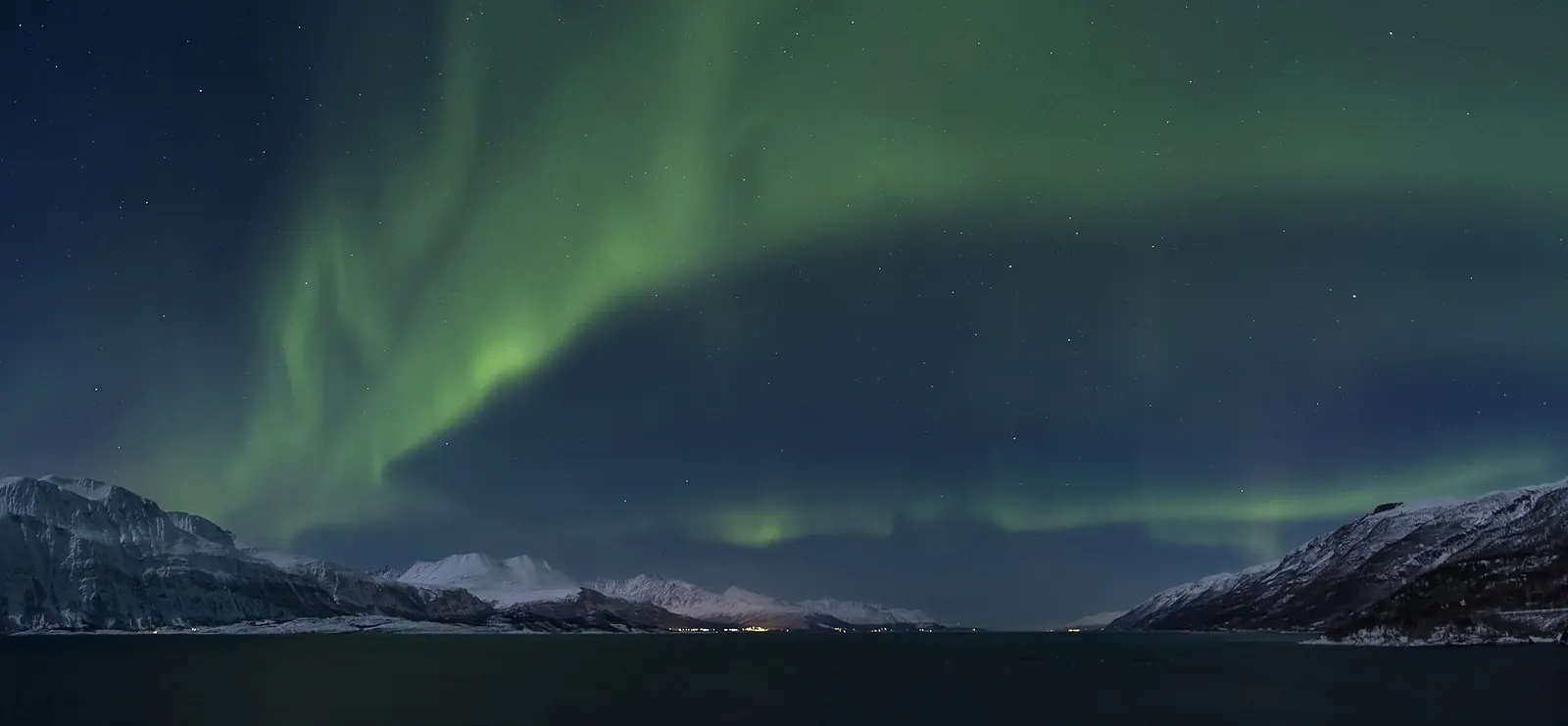
Photo: northern lights over Lyngenfjorden. Not a photo of a property. Ximonic (Simo Räsänen), CC BY-SA 3.0.

The 3 glass-roof stays
No stay here has all of those. Untick one.
-
01
Arctic Panorama Lodge
38 km from Lyngseidet · Google 4.9 (107 reviews)
BookAurora Sky Suite
- Private sauna
“The Aurora Sky Suites, have wall to wall windows and parts of the roof in glass.”
-
02
Lyngen Aurora Resort
11 km from Lyngseidet · Google 5 (3 reviews)
BookGlass cabin
“Four glass cabins for two, thirty square metres each, on the water.”
-
03
Aurora Wonderland
33 km from Lyngseidet · Google 4.6 (112 reviews)
BookCrystal Lavvo
“Cozy glass-roof cabins designed for watching the Northern Lights from the comfort of your bed”
Side by side
"Not stated" means the property's own website doesn't say. It may still have it.
| Stay | Heated or defrosting glass | Aurora alarm | Private sauna | Private hot tub | Own bathroom |
|---|---|---|---|---|---|
| Arctic Panorama Lodge | Not stated | Not stated | Yes | Not stated | Not stated |
| Lyngen Aurora Resort | Not stated | Not stated | No | No | Yes |
| Aurora Wonderland | Not stated | Not stated | Not stated | Not stated | No |
When to go for the northern lights
Clear, dark sky on an average night in the three weeks from 14 January, the clearest stretch of the season in Lyngen.
Dark hours and clear dark hours, night by night
Each bar is one week. The pale bar is how long the sky is dark. The green part is how much of that dark time is clear in a typical year (2 oktas of cloud or less at the nearest weather station, 2015 to 2025).
- Sep1.2
- Oct2.5
- Nov3.4
- Dec3.7
- Jan3.9
- Feb3.1
- Mar1.7
Clear, dark hours per night by month. Cloud: observations at Tromsø weather station, MET Norway, CC BY 4.0. Dark = sun 12° or more below the horizon. Each stay's own page has a night-by-night calendar. Method
Questions
When is the best time to see the northern lights from a glass igloo in Lyngen?
On 10 seasons of weather-station cloud records, the three weeks from 14 January have the most clear, dark sky: 4.0 hours a night on average. December has the longest nights (16.2 dark hours) but only 3.6 of them are clear in a typical year in the week before Christmas.
Do the igloo roofs frost over?
Glass collects snow and frost. 0 of the 3 places here say their glass is heated or has a defrost button. The rest don't say. Ask before you book if this matters to you.
Will someone wake me if the aurora appears?
0 of the 3 have an alarm in the room. Some others give you a phone app instead, which only works if your phone is on and loud.
Can I see the northern lights in summer?
No. From late April to mid-August the sky at Lyngen never gets dark enough. Our chart shows 0 dark hours in those weeks.